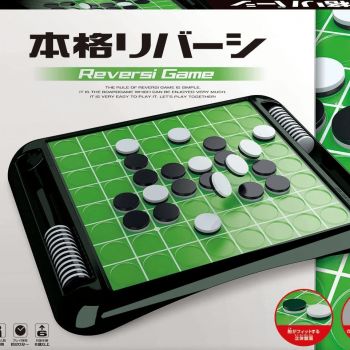
Understanding the Core of Reversi
Reversi is a timeless board game that challenges players to think several moves ahead. The game is played on an eight by eight grid with pieces that have a light side and a dark side. At the start each player controls one colour and the board contains four pieces placed in the centre in a diagonal pattern. The objective is to finish the game with more pieces of your colour facing up than your opponent.
The Flow of a Typical Match
Each turn a player places a single piece on an empty square. The placement must capture at least one of the opponent’s pieces. Capture occurs when a straight line – horizontal vertical or diagonal – is formed between the newly placed piece and another piece of the same colour, with one or more opponent pieces in between. All captured pieces are flipped to the colour of the player who made the move. The game ends when the board is completely filled or when neither player can make a legal move.
Key Strategic Concepts
- Control of the corners is essential because pieces placed in a corner cannot be flipped later in the game.
- Edge positions provide stability but can become vulnerable if the opponent secures the adjacent corner.
- Maintaining a balanced distribution of pieces across the board prevents the opponent from gaining a decisive advantage.
- Anticipating the opponent’s possible responses helps to avoid giving away valuable squares.
Practical Guidance for New Players
For those who are new to Reversi it is helpful to start with a few simple habits. Begin each session by observing the current board layout before making a move. Look for opportunities to flip multiple opponent pieces in a single turn as this accelerates the shift in control. Avoid placing pieces directly next to an empty corner unless you can secure that corner on a later turn.
Developing a Winning Mindset
Patience is a virtue in Reversi. Rushing to fill the board often leads to premature exposure of key squares. Instead focus on creating flexible positions that allow you to respond to the opponent’s actions. Practice makes perfect; playing multiple short games helps to internalise common patterns such as the “X” shape around a corner or the “C” shape along an edge.
Improving Through Observation
Watch experienced players and note how they manage the balance between aggressive expansion and defensive consolidation. Many seasoned players will deliberately leave a few squares empty near the centre to maintain options for later moves. Replicating these tactics in your own games can raise your strategic depth.
What Makes Reversi Enduringly Popular
The appeal of Reversi lies in its elegant simplicity combined with deep strategic possibilities. The rules are easy to learn yet mastering the game requires continuous analysis and adaptation. Because each match is relatively short the game fits well into casual gaming sessions as well as competitive tournaments. The digital version accessible through the provided link offers smooth animation and a clean interface that enhances the classic experience.
Replay Value and Community
Every game of Reversi unfolds differently due to the countless possible move sequences. This variability ensures that players return for fresh challenges. Online platforms often host leaderboards and allow you to face opponents from around the world, adding a social dimension to the solitary strategic challenge.
Common Questions About Reversi
Can I play Reversi against a computer opponent?
Yes most digital versions include an artificial opponent with adjustable difficulty levels. This allows beginners to practice and seasoned players to test their skills against a challenging algorithm.
Is there a recommended time limit for each move?
Official tournament rules often impose a time limit of ten minutes per player for the entire game. Casual play typically does not enforce a strict limit, allowing you to think through each decision at your own pace.
How do I know if a move is legal?
A move is legal when placing a piece results in at least one opponent piece being flipped. The game will usually highlight valid squares when it is your turn, helping you avoid illegal attempts.
What should I focus on in the early stages of a match?
In the opening phase aim to control the centre while avoiding the corners. Building a solid foundation in the middle of the board gives you flexibility for later attacks on the edges and corners.
Are there any resources for improving my Reversi skills?
There are many online tutorials, strategy guides and video lessons that break down common patterns and advanced tactics. Studying these resources and applying the concepts in practice games will accelerate your improvement.